
Custom Software Development

Talk to one of our experts
Custom Software Development

If you run into a different problem, don't hesitate to contact us and together we'll find the right solution
Get in touch with us

What we build

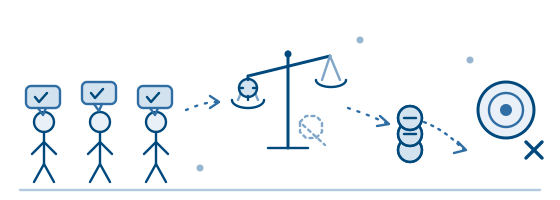
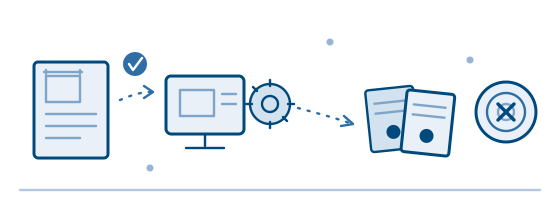
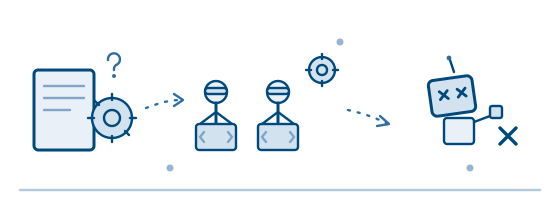
We build four shapes of software solutions, and which one fits you is not decided by fashion but by the reality of the industry you work in. A production hall, a building site or a delivery van is nothing like an office; one regulated field demands traceability where another demands speed; and the season dictates everything in one business and counts for almost nothing in the next. That is why we start from how the work actually happens at your organization — who enters the data, where that person is standing when they do it and what happens when the signal drops — and only then choose the shape. The conditions stay the same in all four cases, though: we build only after showing that the market does not already offer a fitting solution, we tie the build to an owned business result and we leave the code in your ownership.

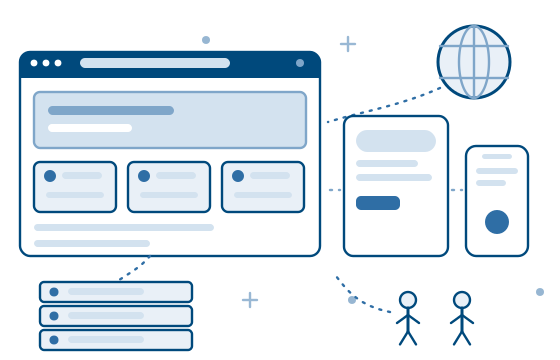
Web Applications

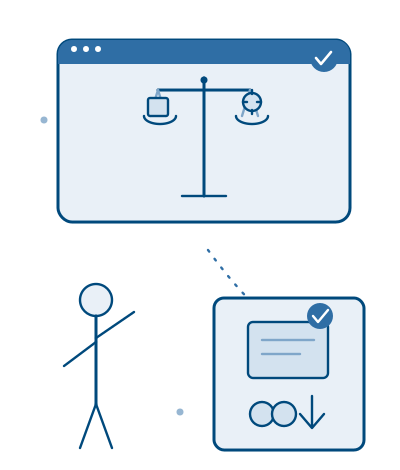
The application lives in the browser, so it needs no installation and does not depend on the machine it is opened on: it is reached from the office, from home or from a phone, and everyone sees the same version, updated in one place. It covers equally well the portal where your customers resolve their own requests and the internal platform your teams work in every day. Each person sees only what belongs to their role, and what happens stays on record, so a decision can be reconstructed a year later. It connects to the systems you already run, so data isn't entered a second time, and it is built to absorb a growing number of users without being rewritten from scratch.

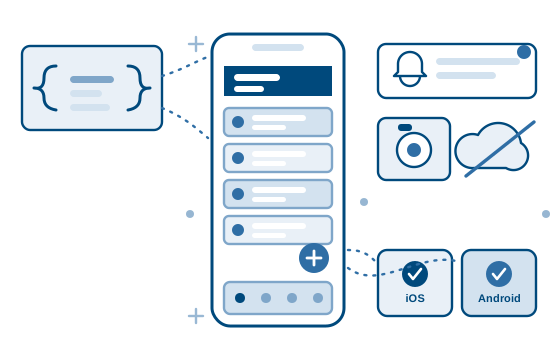
Mobile Applications

The application sits on the mobile devices of your customers, employees or collaborators and opens with a single tap, without depending on a computer. We build it once and publish it to both stores, covering iPhones and Android devices alike, so you don't maintain two products that gradually drift apart. It uses what the phone already has: the camera for scanning and photographing, location, notifications that reach the person at exactly the right moment. It works where there is no signal, and whatever was done in the field synchronizes by itself once the connection returns — for someone in a warehouse, on a site or on the road, that is the difference between a tool that gets used and one that gets abandoned.

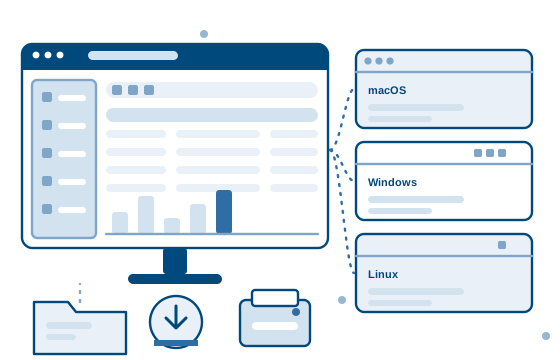
Desktop Applications

The application installs on the computer and starts like any other, with its own window, menus and keyboard shortcuts — right where people spend hours in the same screen and need speed, not one more tab among many. It runs on Windows, macOS and Linux from the same build, so you don't pay three times for the same thing. It works directly with the files on the computer and with connected equipment — printers, scanners, barcode readers, measuring instruments — things a page in a browser reaches with difficulty or not at all. It works without internet too, and updates install themselves in the background, so everyone works on the same version.

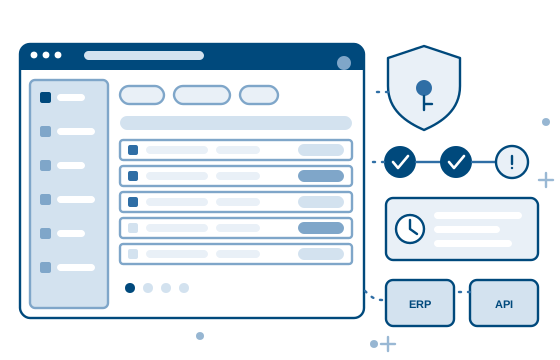
BackOffice Solutions

The back of the business, which customers never see but which everything they do see depends on: this is where records are kept, approvals are given, corrections are made and reports are produced. Each person signs in with their own permissions and sees only what concerns them, and approvals follow a path set in advance, not a chain of messages and recollections. Every change stays on record — who, what and when — so a figure can still be explained six months later, to an auditor, a bank or a funder. It connects to the programs you already use, so the same information isn't typed into three different places, and it produces the reports you need without anyone losing an evening to spreadsheets.


How we build: Agile, TDD, CI/CD

Working discipline matters more than the list of technologies, because it decides whether the solution can still be changed three years from now. We work in short increments, we write the test before the code and we deliver through an automated chain, identical every time.

In the end, what stays with you is not just the application: the source code, the tests, the architecture documentation and the delivery chain come with it. Without them, any future change would tie you to a single vendor again — precisely the situation this service exists to avoid.
Agile — short increments, with the right to stop

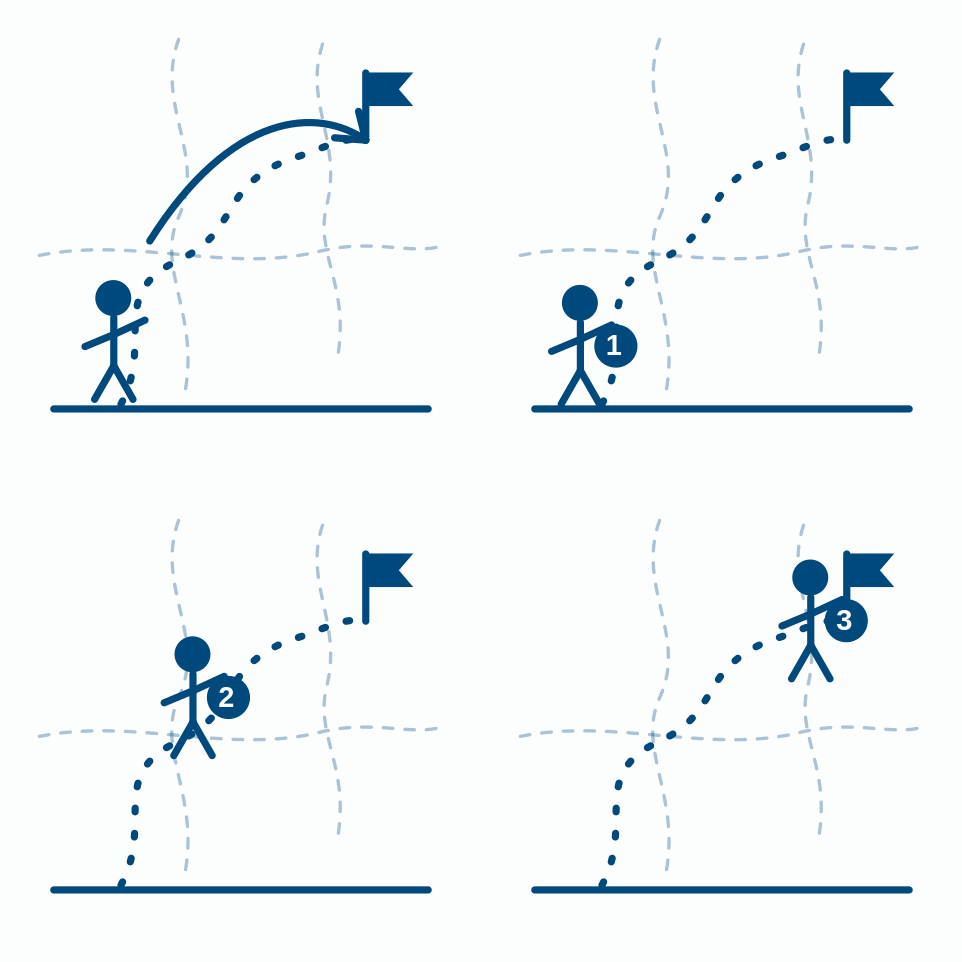
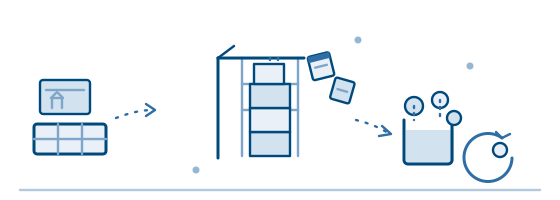
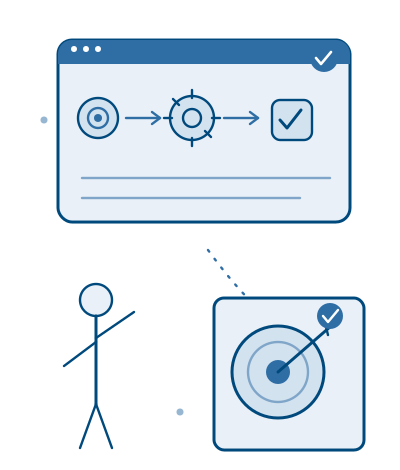
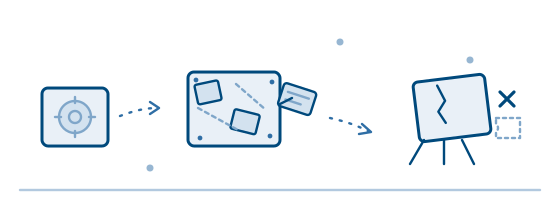
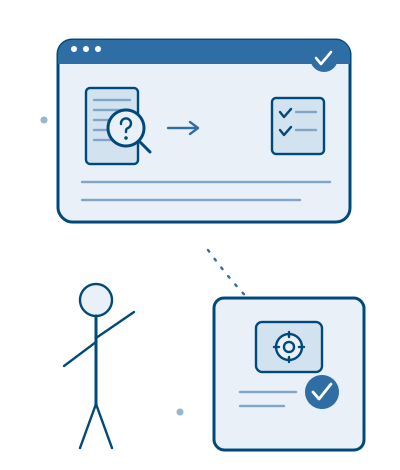
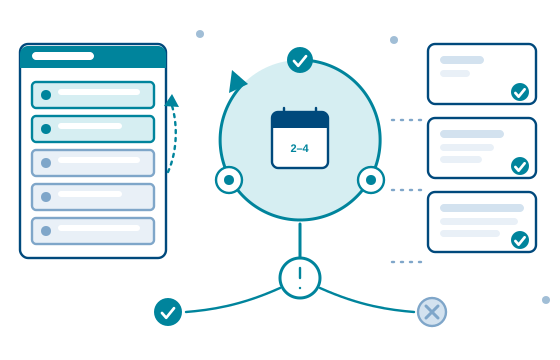
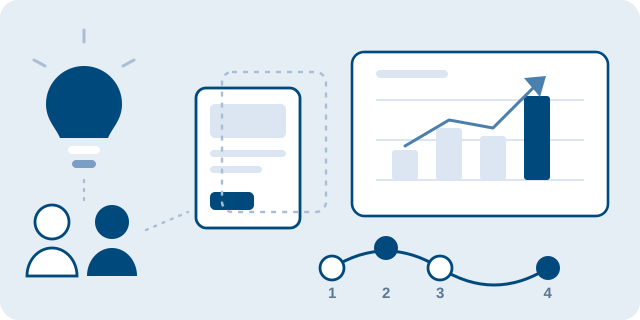
We work in increments of two to four weeks, each ending with something you can see and use, not with a progress report. At the end of every increment priorities can change (within the limits agreed in the contract) and the work can stop — a partner whose interest is to also tell you "don't build" has to leave that exit open too. What gets delivered in the next increment is decided by the business result, not by who asks most insistently.

  1. We plan the increment
  2. We deliver something working
  3. We recalibrate priorities

TDD — the test before the code

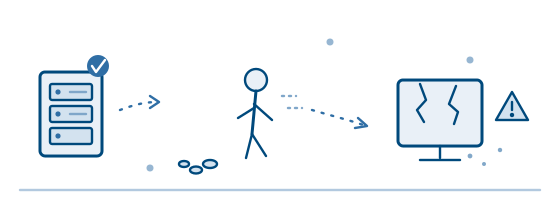
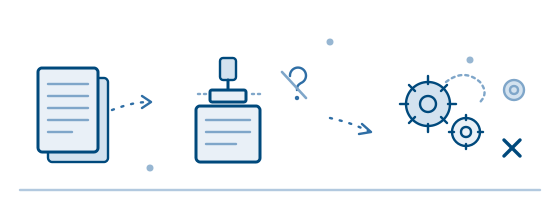
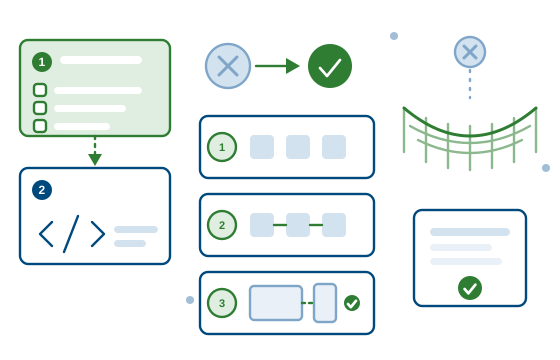
The test is written first, and the code is written to pass it. We verify on three levels: unit, meaning each piece on its own; integration, meaning the pieces working together; and end-to-end, meaning the user's complete journey, in the browser or on the phone. The effect shows not on the first delivery but on the second change: regressions surface in the automated chain, not in front of your customers, and the maintenance cost stays predictable instead of growing year after year.


  1. Unit — each piece
  2. Integration — pieces together
  3. End-to-end — the full journey

CI/CD — automated, repeatable delivery

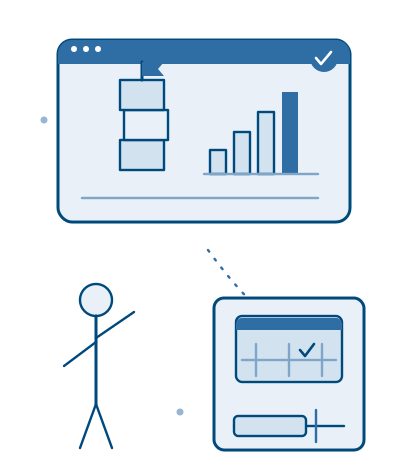
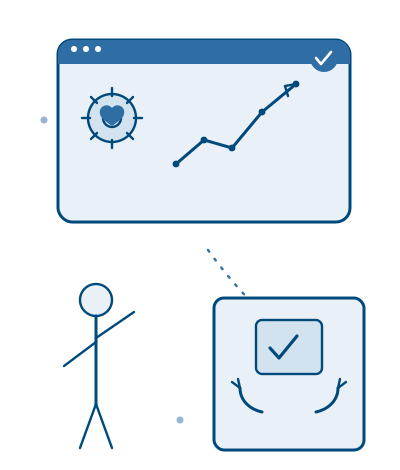
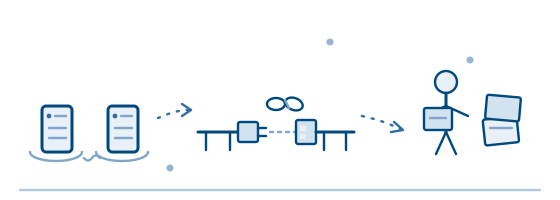
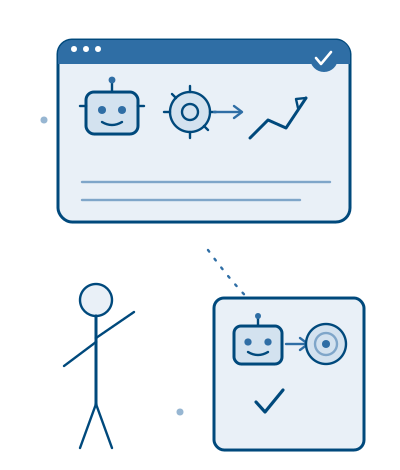
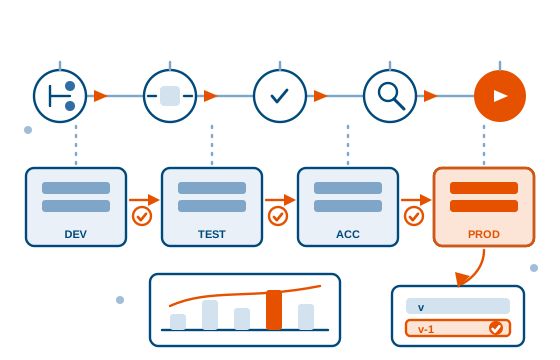
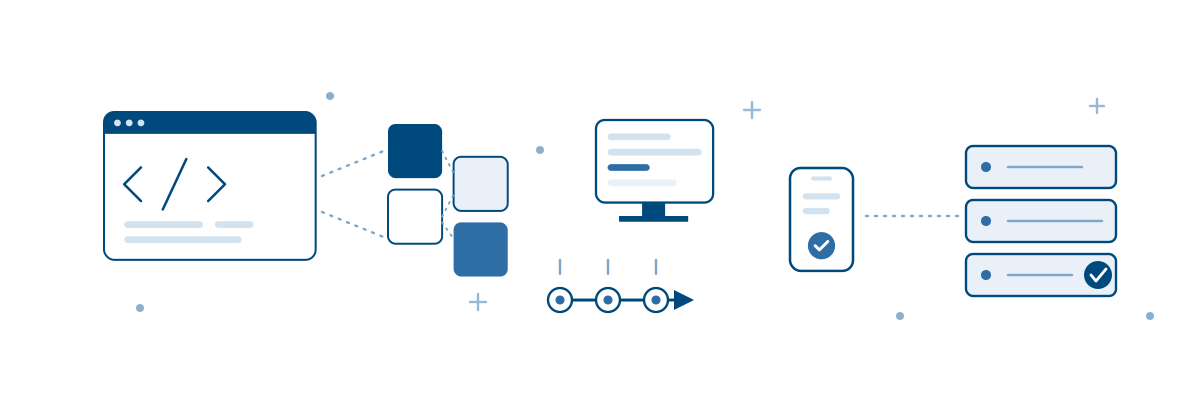
Every change goes through the same chain, with no manual steps: it is built, all the tests are run, the code is analysed automatically for defects and vulnerabilities, then it is packaged and delivered. It passes four environments — development, testing, acceptance and production — and the last receives only what has cleared all the others. In production, a dashboard shows at any moment what is happening, and rolling back to the previous version is a routine operation, not a crisis: the same automated procedure that shipped the new version can take it back out.

  1. Development
  2. Testing
  3. Acceptance
  4. Production

Together we build for you

Together we build for you.

Get in touch with one of our experts

Technologies

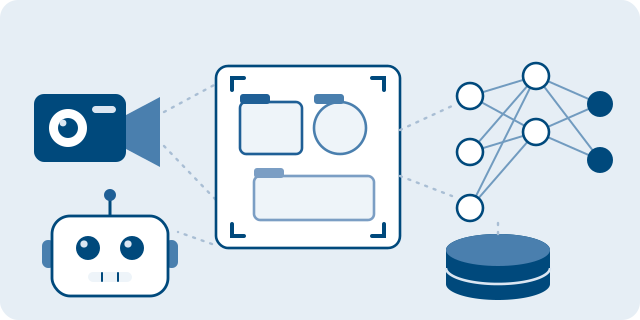
We pick the right technology for each problem — from web, mobile and data to cloud, DevOps and artificial intelligence.

@Cronoxy 2006 - 2026. Together we change the world.